
A couple of weeks ago, my husband, Jeff, was given a heads up that someone he had been around was being tested for Covid. No other pertinent information was disclosed – just that he had been in “close contact” with someone who could possibly have the disease.
When Jeff shared this information with me, I did what any reasonable person (trying to survive a pandemic) would do, I freaked out.
“What do you mean you were in close contact? How close? Closer than six feet? For how long? Five minutes? Fifteen minutes? Were you wearing a mask? Was he wearing a mask? Did you touch this person? Did this person touch you? When will he get his test results?”
 In my brain, I knew better. Just stop. He told you what he knows. But in reality, I couldn’t. I had lost all control – of myself and the situation. There was nothing I could do about this other person who may or may not have the coronavirus. And, there was nothing I could do now to prevent Jeff from contracting it. With that said, yes, in hindsight, I know I could have responded with much more empathy and in a much more measured and rational way. Truth be told, I was scared. That’s a lie. I was terrified. What if Jeff’s friend tested positive? What if Jeff tested positive? Would Jeff, the guy who typically has a really difficult bout with bronchitis every winter, have severe symptoms or a mild case? I had no answers. So much uncertainty = so much fear = so many questions = so much stress = Mary Jane spiraling out of control.
“What exactly were you told? Does this person have symptoms? When was the test? Can we go back to the close contact? How close? How long? Were you yelling across a room or having a conversation at your desk?”
I heard myself asking the same questions over and over. I felt like I had to understand every single detail even though these details really meant nothing.
“Were you wearing a mask?”
Jeff started to slowly back away in an attempt to disengage from this merry-go-round of an interrogation. I followed him as he walked into the kitchen, opened a cabinet door and rummaged around for a glass. I thought my head was going to explode.
“Why are you touching all of the things? You need to pick one glass and use it. Or maybe get a plastic cup and mark it so that no one else drinks out of it. Don’t start touching everything. Wait – let me get a glass and I will get you something to drink.”
I grabbed a glass, filled it with water, and slyly handed it to Jeff, careful not to let his potentially virus-laden hand touch mine. One hand on his hip, Jeff gave me that, “Really?” look, but I had no time for it.
I quickly turned around and washed my hands. I then grabbed the Lysol wipes and retraced the placement of Jeff’s hands throughout the kitchen area. When I finished, Jeff was gone. I ran into the livingroom and found him seated on the couch. I immediately cringed, imagining the coronavirus germs oozing into the fabric of the couch. How would I sanitize that?
 “I think you need to get up. You need to confine yourself to one room. Maybe you should go in the bedroom. There’s a bathroom there. I can put food outside of the door. You can survive for 14 days in there and maybe David and I won’t get it. Or, you could go live in the basement. That’s what Chris Cuomo did when he tested positive for Covid.”
Creating our plan for surviving the coronavirus based on how a TV personality lived at home with it didn’t seem at all laughable or illogical. It was downright genius – especially given Cuomo’s outcome. He survived.
Jeff could move to the basement. There’s a full bathroom, a comfy couch, his computer (for working from home), a refrigerator, and a TV. As I finalize this survival plan in my brain, I decided I should run it by someone who is more in the know – in case I’m missing something. So, I called my sister, Liz.
Liz is a nurse and one of my extended family’s go to persons for all things medical. In addition, she dealt with a similar situation. Liz attended an event and days later found out one of the people in attendance started feeling sick and was tested for Covid. While my sister waited for her friend’s test results, she stayed home. I remember talking to her on the phone about it and marveling at her calm. What is this magical way of being that you so easily embody?
After I relayed my story to Liz, she suggested that if Jeff was infected, David and I were probably infected, too. There was no real need for Jeff to quarantine from us at this point. As a family, we probably needed to quarantine from the outside world. Great.
As I was digesting Liz’s message and hanging up the phone, I noticed my son’s friend, Donovan, emerge from our basement. He turned as he headed out the front door, “Thanks for having me!”
Thanks for having me? Are you kidding? Your mom is going to kill me. What if we just shared our coronavirus germs with Donovan? I quickly picked up my cell and called his mom, Sherri. I told her how Jeff might have the coronavirus. Someone he was in contact with might have it. If that person has it, then maybe Jeff contracted it. If he contracted it, maybe David and I did, too. If David contracted it, he could have given it to Donovan.
When I finally stopped babbling, there was a short pause on the other end of the phone and then Sherri said, “First, you need to calm down. There is not enough information here – too many questions. So just calm down. Maybe have a glass of wine. Take a deep breath. Everything will be OK.”
A few deep breaths and “calm downs” later, I was off the phone and at my computer Googling:
“What to do when a contact tests positive for coronavirus?”
“Testing strategy for coronavirus.”
“What if a family member tests positive for coronavirus?”
“Covid-19”
“Covid test times.”
“How long until Covid symptoms appear?”
“Missouri coronavirus map.”
“Easy cannoli recipes.”
I tried rebooting my brain with some other obsession or topic, hence the cannoli recipe search. It didn’t really work. If I wasn’t talking about Covid, I was thinking about it.
Somehow, I managed to fall asleep that night. Jeff did not sleep quite as soundly and told me he felt a tightness in his chest. He recognized this symptom as the beginning of a respiratory issue. With little coaxing from me, Jeff got dressed and headed to an urgent care.
In and out in a little more than an hour, Jeff had a chest x-ray and EKG – both normal. He was also swabbed for Covid. The doctor told him he would get the results within 24 hours.
When Jeff got home, we talked about the clear x-rays and normal EKG and the possibility that his chest pains might be stress related. Although Jeff wouldn’t say it, I knew my behavior contributed to Jeff’s stress level. I had to stop.
I thought back to the beginning of the pandemic, when we initially got the stay at home order, and tried to recall the strategies that helped me cope during the more anxious times. I remembered writing about the experience, so I revisited “Writing My Way Through the Nightmare” and “Finding Good in the Middle of a Pandemic.”
While rereading these blog posts and flipping through the accompanying notes, I came across a March Facebook conversation with a college friend, Martha Meli. In this back and forth, I asked Martha how she was coping with the social distancing and the realities of living during a pandemic. I noticed she was posting a lot of COVID-19 parodies and comedy sketches from YouTube and wondered how humor was supporting her well being.
Speaking to staying home, the selfless and insightful native of New Jersey shared, “I’m doing fine. I am blessed, and very lucky that this stay at home order is less than an inconvenience for me. I have a home, I still have a job and one I can do from home. I have plenty of groceries and TP to keep me OUT of the stores (at least for the time being). I look at my stay at home order as my contribution to the front-line essential workers. I am staying home, staying healthy and staying out of the hospital!”
 Reflecting on how humor was helping her early on during the quarantine, Martha commented, “I am so grateful to those creative and talented Americans who are still finding the time to keep entertaining virtually. I’ve always loved comedy, so every day I find a COVID-19 parody, or comedy sketch on YouTube that I can circulate to my friends and family so that we can have a VIRTUAL laugh together. Laughter really is the best medicine for me…and wine.”
The fact that Martha said she always loved comedy came as no surprise. Although we hadn’t seen each other in a very long time, I remembered that about her. I missed her playfulness and her wit. During our university years together, we lived in the same dorm. I had a front row seat, watching Martha in motion – making people laugh. Such a gift. Her positive attitude and energy made her one of those people you wanted to be around. And her humor was always welcome – especially during the stressful times. Laughter definitely felt like medicine during finals, the night before a big quiz or when you were pulling an all nighter.
Science supports Martha’s view of laughter as medicine. Research shows that laughter strengthens the immune system, boosts mood, diminishes pain and protects from the damaging effects of stress. An article on HelpGuide, a nonprofit health and wellness website, states, “Nothing works faster or more dependably to bring your mind and body back into balance than a good laugh. Humor lightens your burdens, inspires hope, connects you to others, and keeps you grounded, focused, and alert. It also helps you release anger and forgive sooner.”
Seeking to restore some balance in my household, I prescribed a huge dose of sitcom watching for the whole family. Since I was the only one who really needed this therapy, I wasn’t too disappointed when my guys opted to pursue other forms of entertainment and I sat by myself and watched several episodes of “The Office” and “Wings.” A couple of hours later, I felt 100 percent better. They felt better, too.
We actually laughed at dinner. I don’t think I brought up Covid even once.
The next day, Jeff got his test results. Negative for Covid. His contact, also negative for Covid. My sister’s friend, also negative.
While we heaved a collective sigh of relief, we were quick to count our blessings.
(By the way, some of the same studies that discuss the positive impact laughter has on one’s well-being assert that folks that adopt an attitude of gratitude reap rewards when it comes to good health, too.)
About four weeks into the pandemic, I read a tweet from a motivational speaker that said something to the effect of – if you don’t come out of this pandemic having hit all of your goals, you’re not doing it right. I applaud all of those people who are living with this brand of ambition and intention. At this point, I’m just trying to survive.
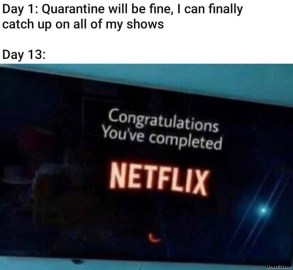 While this blog talks about laughter as medicine during the pandemic, please don’t misinterpret what I’m trying to say. The coronavirus is no joke. These are serious times. And we are doing what we have to do to make it through. We’ve set aside fitness goals because we’re watching “Fresh Prince” reruns (in order to ease our anxieties about Covid-19). We’re not writing the next great novel because we are doing all of the recommended things to help our friends and neighbors. It’s all OK.
Our lives are different now. We are working from home. We’re furloughed. We’re unemployed. We’re supporting our kids through distance learning. We’re making targeted runs to the grocery store. Some of us have everything delivered and seldom venture out. We’re social distancing. We’re wearing masks. We’re mourning those who’ve died. We’re scared for those Covid-19 long haulers who don’t know what health issues they might encounter in the future.
At times, we don’t recognize ourselves. We grieve what once was.
I remember back in March when I didn’t know anyone who had the coronavirus. I can’t say that anymore. One of my sisters-in-law had it for weeks. She spent time in the hospital as the disease wreaked havoc with her heart rate. A niece also had it. Despite being young and healthy, she was still struggling with a cough and pain in her side after weeks of the illness. Friends have had it. A colleague’s brother had it and died. A student’s grandparent had it and died.
It’s August and Covid is everywhere. Yet it’s invisibility makes it feel like it’s nowhere at the same time.
There is so much uncertainty. We wonder when we will get to the other side.
We keep powering forward. We try to remain hopeful. It’s not easy.
So let’s give each other the grace to feel the way we feel and be the way we need to be. It’s OK to feel angry, worried, discouraged and helpless – just not all of the time. We’ve got to pick ourselves up, pick each other up, and keep living our lives.
I recommend a hearty dose of “Seinfeld” when the going gets really rough. Although there’s nothing funny about what we’re going through right now, science and medicine suggest laughter might help. It worked for me. I pray it works for you, too.
 So, in addition to writing as therapy, I decided to focus my attention on any kind of media that exudes positivity. I want the stuff that chronicles happier goings-on – the videos, still photos, music, the written word. I need to hear the tales that uplift, pump up and cheer on. I want to find the narratives that we can feel good about and that won’t give us nightmares. I don’t want a fairytale. And I don’t want the silly memes that make us laugh for a moment, and then feel guilty because what we’re laughing about somehow tears someone else down. I want good news. Tell me something good!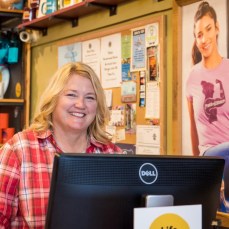
 The mission of this Facebook page is simple: to keep positivity at the forefront during the current health and economic crisis while also giving Amy a place to promote her business. Scroll through the feed and on any given day you can count on a “Seeing the Beauty” post, an inspirational thought of the day and some kind of update about store merchandise including Jake’s Closet (explained later).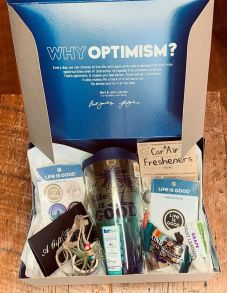
 There was little relief when I discovered the slider was closed. I unlocked it and stepped out on the deck to see if the figures were indeed making their way into the backyard. They were feet from me – already on the steps to the deck. How did they get there so quickly?
 After my June 10, 2017, blog (
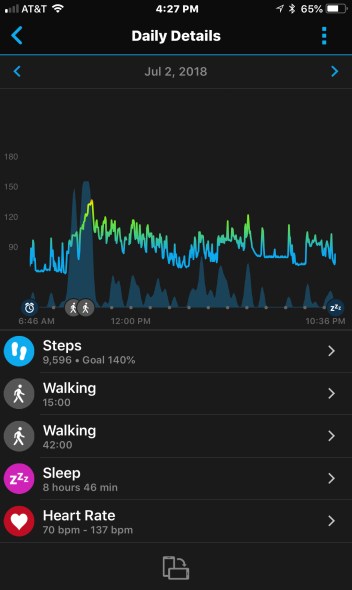 I have a Garmin Vivosmart HR that I use to track my activity. I’ve had some sort of tracking device for years, but it wasn’t until two summers ago that I started using this technology correctly.
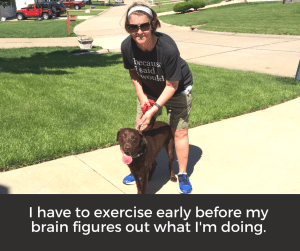 Putting off exercise.
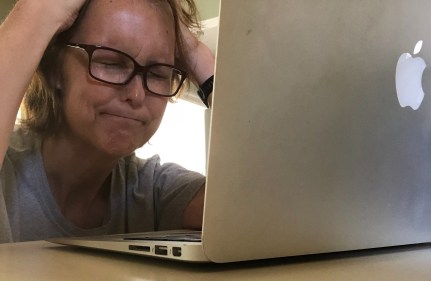 When school ended (right before Memorial Day), I found myself with some extra time and decided to pick up the blogging ball again. Yes, that was THREE WEEKS AGO. Problem is, until now, I’ve been struggling to find something to write about. My brain couldn’t conjure up even a mediocre idea. I had nothing. Nada. Zippo.
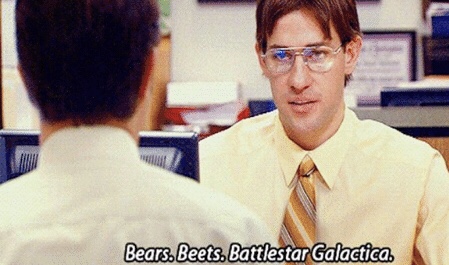 About a week and a half ago IHOP, the International House of Pancakes (See how I did that?), announced it would change its name to IHOb, flipping the “P” to a “b.” Initially, people appeared to have fun guessing what the “b” meant. Could it be bacon? Bitcoin possibly? Bears? Beets? Battlestar Galactica? (Hey lovers of “The Office” – you’re welcome!)
 Johnson-to-Ocho Cinco is among “10 of the Most Ridiculous Name Changes” as outlined by Time magazine in an article in 2011. Also making this list was Prince. In 1993, Prince changed his name to unpronounceable symbol that was a combination of the symbols for man and woman. Verbally and in the press Prince became “the Artist Formerly Known as Prince,” despite his insistence that the correct phrasing for his new moniker was Love Symbol No. 2. After a number of years using that symbol, the Artist changed his name back to Prince in 2000.
 I paid it forward through the years and taught others to juggle. I taught a few of my siblings. I taught a couple of high school students during a study hall at my first teaching post. These students took their talent to the stage at the school’s first talent show (pictured at left). They started with the bean bags and upped the ante. They juggled bowling pins and a bowling ball. It. Was. Amazing. They brought down the house.
 During the last 30+ years, there have been occasions when I have suffered from “Jogging Juggler” syndrome. During each instance, I wasn’t immediately aware if the syndrome was the result of bad technique or me selecting the wrong objects to juggle. I just know I was so out of whack that I was damn lucky I didn’t drop any balls.
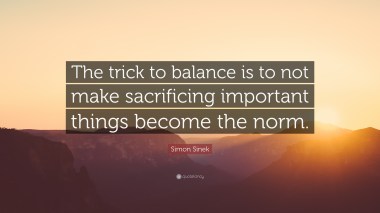 Choosing items carefully is sort of the first step toward achieving balance in our lives, too. We review our priorities. We examine. We decide what will work for us and what will not. We weigh our skills, experience, abilities and VALUES against the requirements of meeting the needs and expectations of all that we’re juggling. The fact of the matter is, we all have different abilities and preferences when it comes to juggling. Some of us can juggle the bowling ball. Some of us can’t. Some of us want to try to juggle the bowling ball. Some of us don’t. It is important to note that achieving balance is not without some sacrifice. If you to choose to juggle a big career and family, for example, you probably need to sacrifice your longtime dream of becoming the next Food Network Star.
 OK, so she’s not screwed, you’re thinking to yourself. She can fix this. She just needs to lose some weight. I absolutely agree with you. I need to put down the Nutty Bars and Double Stuf Oreos. I need to bypass the QuikTrip and its 5 cent Tootsie Roll bin. I need to exercise more and spend less time lying around watching Netflix and Law and Order reruns.
 In addition, the article shared, two researchers, studying long-term dieters, found that about half the people who maintained a substantial weight loss for more than a year had done it on their own. On. Their. Own. No plan. No program. No lists. No points. These folks exercised, chose to eat foods based on their nutritional value and calories and as a result they lost weight.
 Take a look at the picture on the left and tell me what you see. A beautiful stack of greeting cards, right? That’s what I see, too.
 It just happens because I love to send hand-written notes in beautiful greeting cards. And I want to make sure when I’m sending a card that it assists in accurately and adequately communicating my thoughts, feelings and intentions. In order to accomplish the preceding, I must have the right cards for all possible occasions. The image on the front has to be right. The words on the front have to be right. The words on the inside have to be right.
 Matt has taken on what life has handed him with enthusiasm, creativity, grace, and a sense of humor. Fortunately for avid readers like you and me, he’s written about it. Prior to his accident, Matt had accumulated over 25 years of experience in the construction and real estate development businesses. Following his accident, initially, rehabilitation became Matt’s life’s work. After two years of physical therapy, however, Matt and Lisa made an important decision, “We either rehab for the rest of our lives or get on with life.” They got on with life. For Lisa – that meant returning to full time nursing. For Matt – that meant returning to school. After earning a B.S. in Organizational Leadership, Matt went on to receive a Master’s in Communications.
 When you’re 5 years old, the biggest obstacle in your life should be the playground monkey bars. You shouldn’t have to worry about money, your health, what you’re having for dinner or how you’re getting to school in the morning. These should be the concerns and talking points for the adults in your life. But, as the adults, we know, and sometimes children are quick to learn, that life doesn’t always follow the path or pattern we imagine. The hard reality is that life isn’t fair. It hands us lemons. Sometimes, it goes one step further, and hands us heartache and disappointment.
 She honors her dad through her perseverance. She reaches her dad through her soccer play and by connecting with those who once knew him. Throughout his coaching career, Michael Schwer mentored several Olympic athletes including Lori Chalupny and Becky Sauerbrunn. Hannah has stood in line for hours in order to meet these players – seeking any kind of information or insight they might share about her dad. After hours waiting to meet Lori Chalupny, Hannah’s persistence earned a priceless reward when Lori told her, “Michael Schwer was one of my favorite people – one of the best people I ever knew.” As joyful as these meetings are, they bring with them a bittersweet reality that these players knew Hannah’s dad longer than she did.
 Life After Ted